The two-form version of the Ken-tai Ichi no Kata is the form Mochizuki published in Nihonden Jūjutsu (1978). It contains five forms, and each is shown twice — once with the sword and once empty-handed — so the version comprises ten techniques in all. The two are meant to be read together: the empty-hand technique is the same motion as its sword twin, on the same line and timing. This is the meaning of ken-tai ichi — sword and body as one.
In his opening essay, Mochizuki records that he created the kata himself, "establishing" (seitei) it about ten years earlier, because he had trained the old sword methods before he came to aiki and could therefore trace, technique by technique, how the body work and the sword work correspond.
The five forms
Ken‑tai Ichi no Kata consists of five paired forms — each with a sword version and an unarmed version. Every pair expresses the same line, timing, and structural logic.
The sword teaches the line; the body expresses it.
Each form below is given in both modes — the sword technique first, then its empty-hand twin.
First form
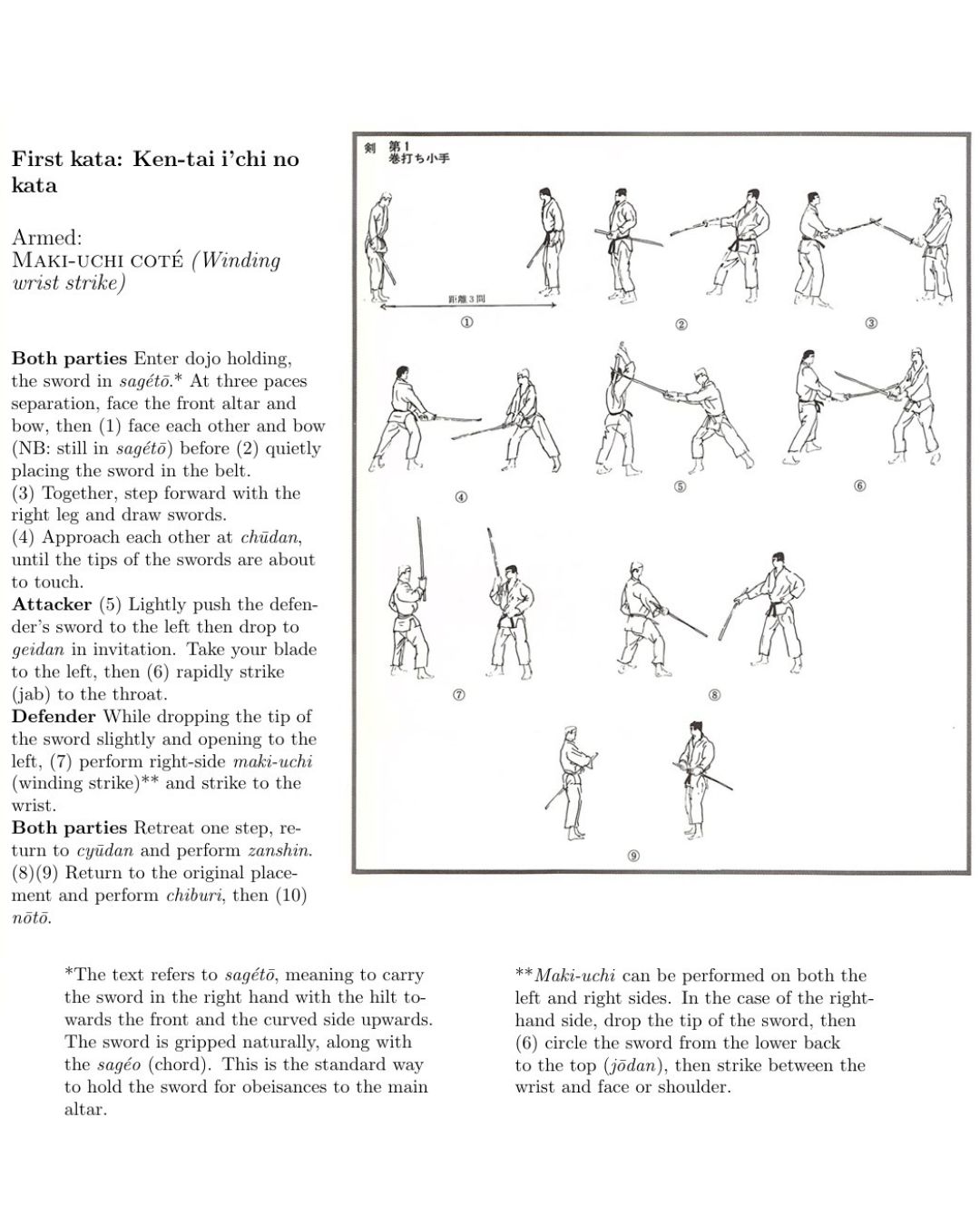
- Sword — Maki-uchi kote (巻き打ち小手), winding strike to the wrist.
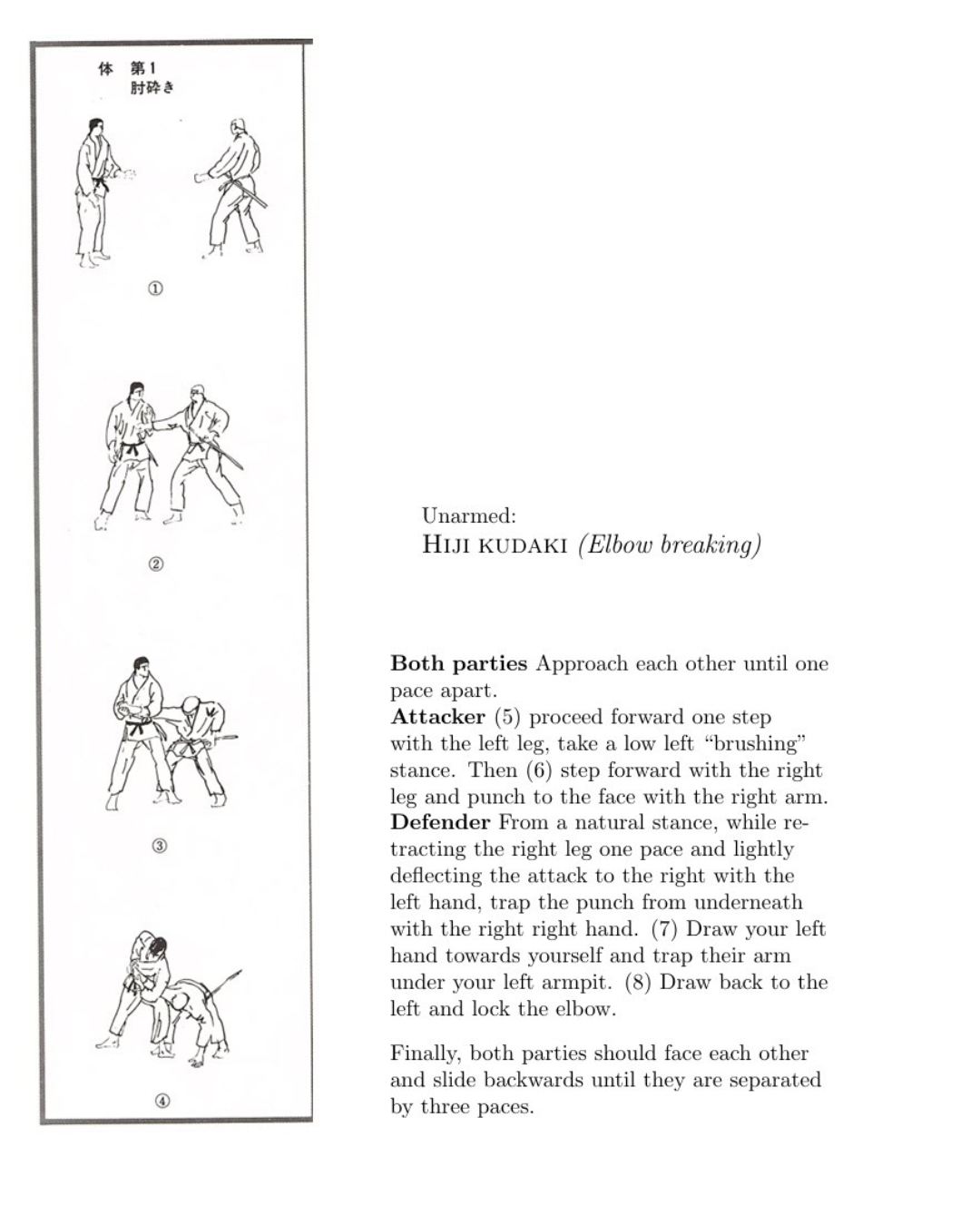
Against a feinted throat-thrust, the responder lowers the tip, opens to the left, and strikes the wrist with a winding cut. - Body — Hiji-kudaki (肘砕き), elbow-break.
Against a thrust to the face, the responder parries the arm, clamps it beneath the left armpit, and locks the elbow.
Second form
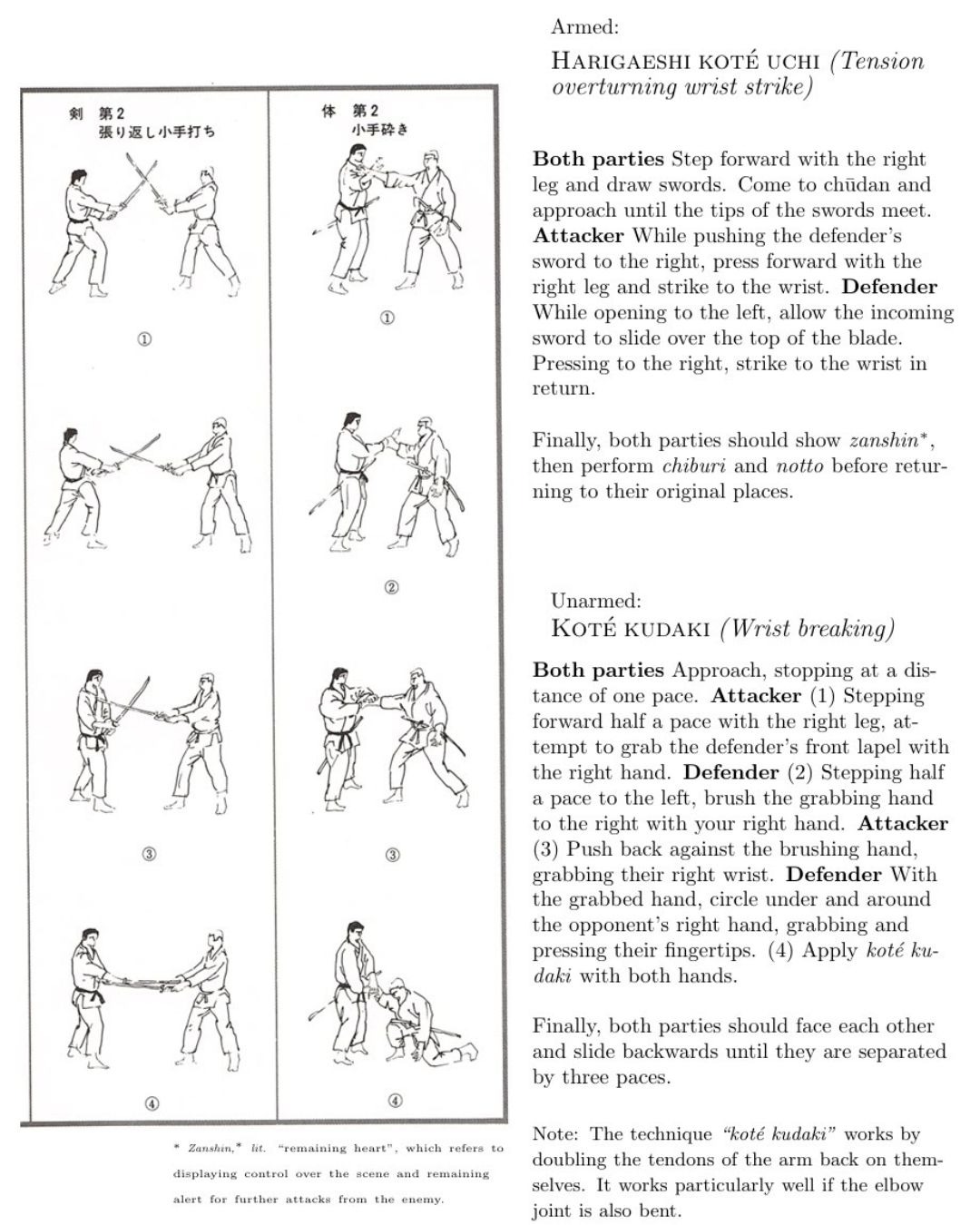
- Sword — Hari-kaeshi kote-uchi (張り返し小手打ち), parry-back wrist-strike.
Against a pressed strike to the wrist, the responder deflects it upward, presses it aside, and returns the strike to the wrist. - Body — Kote-kudaki (小手砕き), wrist-break.
Against a grab to the collar, the responder reverses the grip and folds the wrist joint.
Third form
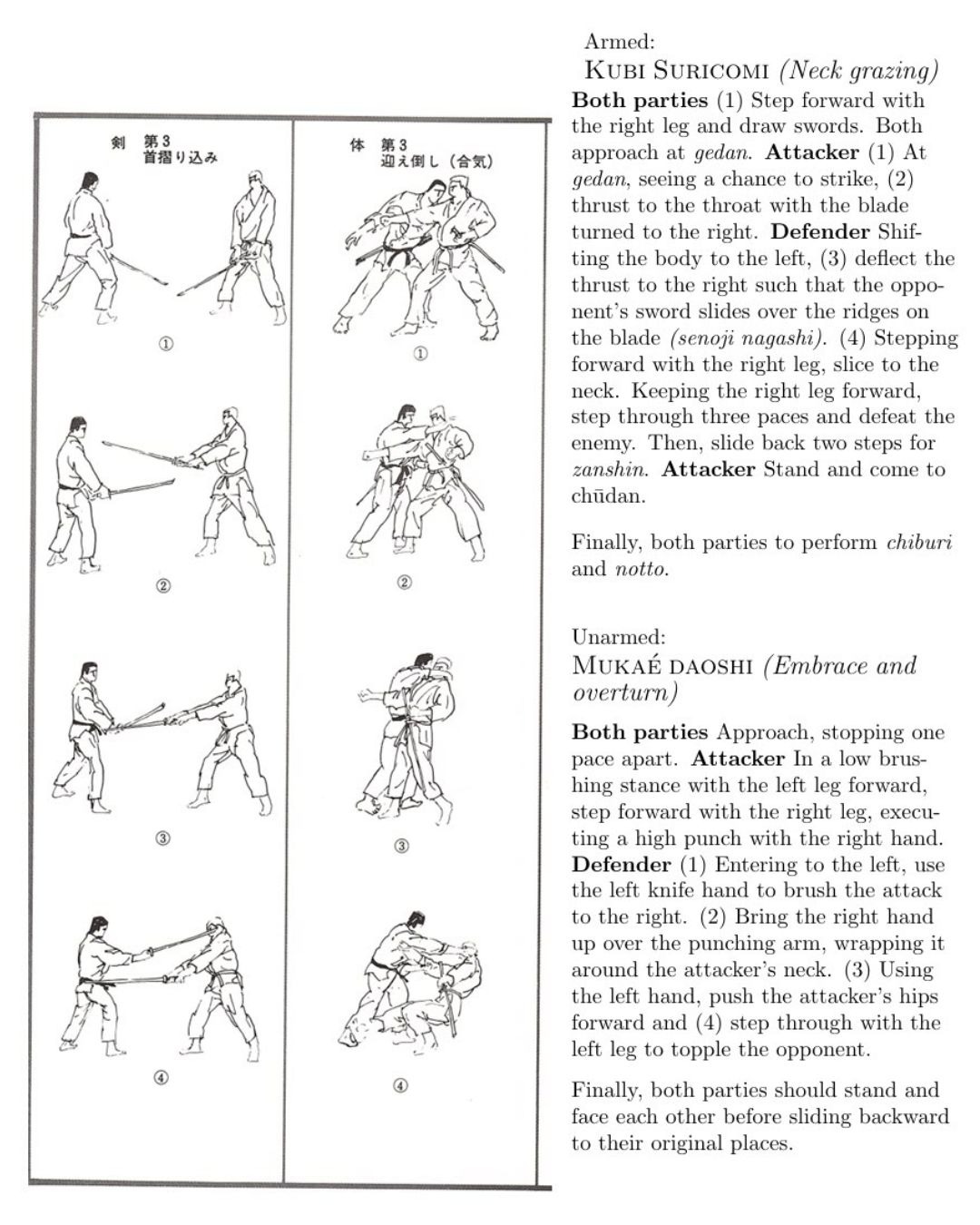
- Sword — Kubi-suri-komi (首摺り込み), neck thrust-slide.
Against a thrust to the throat from low guard, the responder turns the body, lets the thrust flow past, and slides forward into the neck. - Body — Mukae-taoshi (迎え倒し), receiving-topple.
Against a pursuing thrust, the responder enters, cradles the neck, presses the small of the back, and topples the attacker backward.
Fourth form
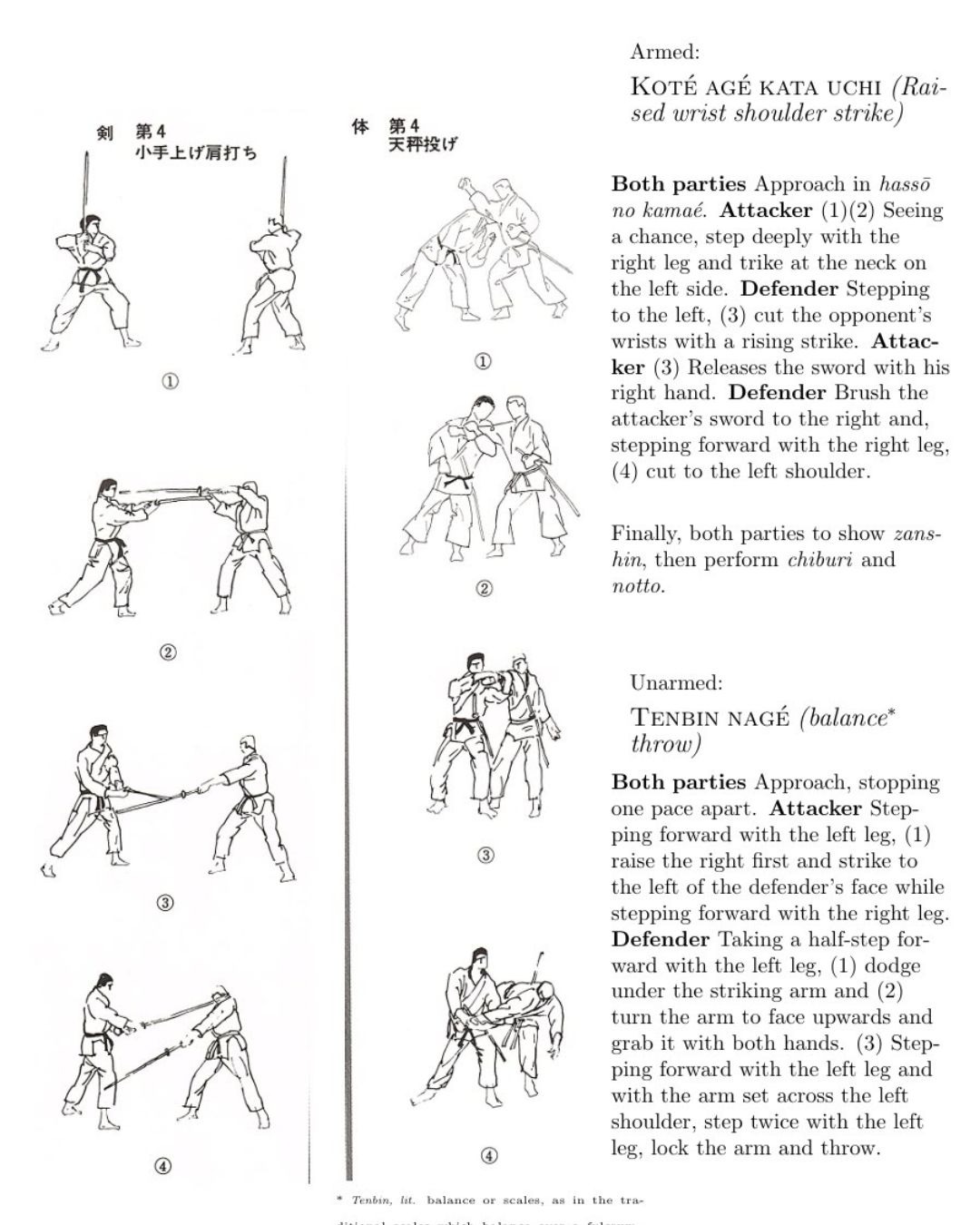
- Sword — Kote-age kata-uchi (小手上げ肩打ち), wrist-raise shoulder-strike.
Against a cut to the neck from hassō, the responder cuts the wrist up from below, then steps in and strikes the shoulder. - Body — Tenbin-nage (天秤投げ), lever throw.
Against a strike to the side of the face, the responder ducks under the arm, hoists it onto the shoulder, and throws.
Fifth form
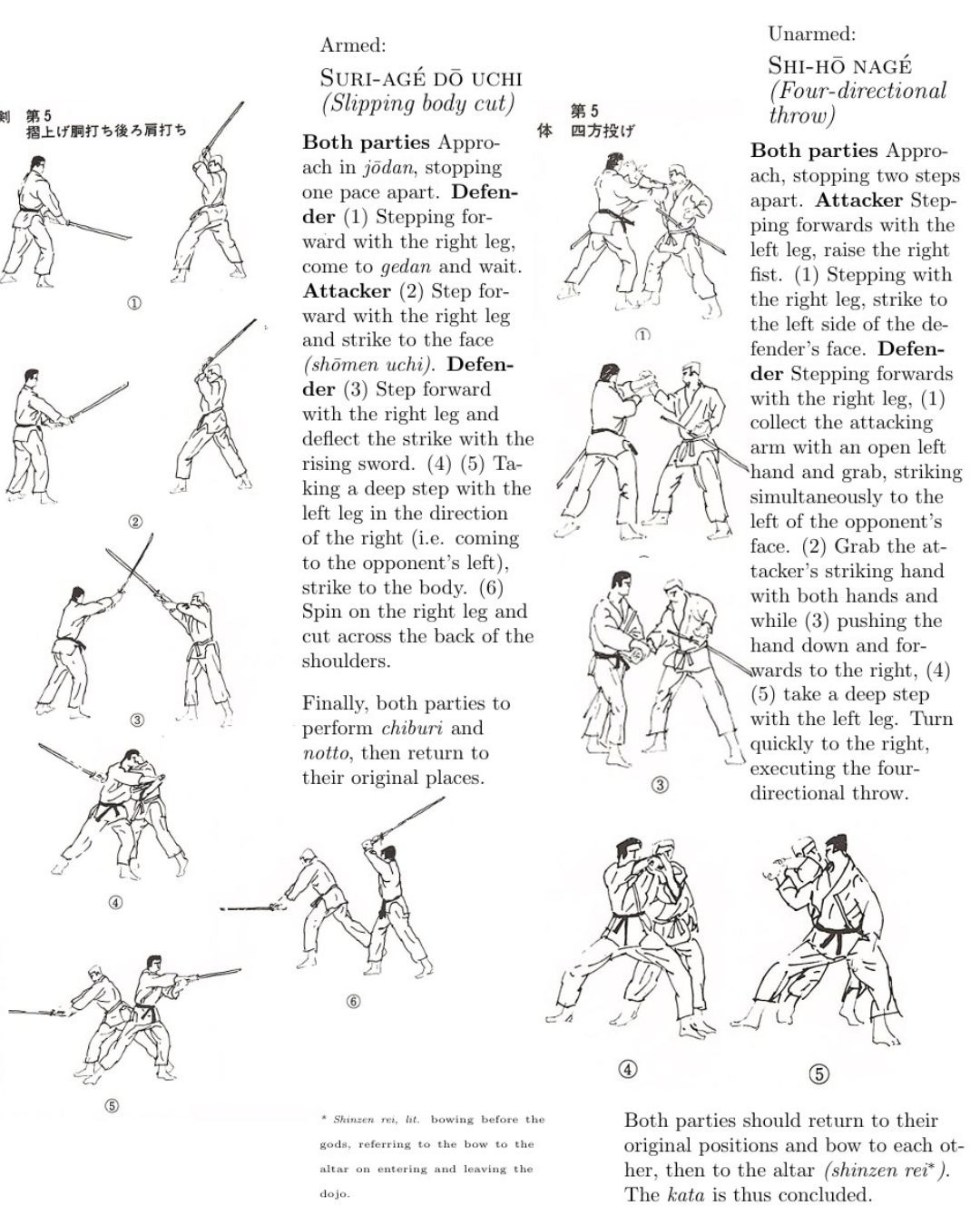
- Sword — Suri-age dō-uchi (摺り上げ胴打ち), deflect-up body-strike, followed by a strike to the shoulder from behind.
Against a downward cut to the head, the responder sweeps the cut up, cuts the body, and turns to strike the shoulder. - Body — Shihō-nage (四方投げ), four-direction throw.
Against a strike to the side of the face, the responder seizes the arm with both hands, turns, and locks.
See it demonstrated
Demonstrations of the kata appear on YouTube from time to time. The following are recordings by other practitioners, linked here while they remain online. Each should show the two-form version — sword and body, without the sword-against-unarmed mode.
Jan de Jong Aikido. 2min
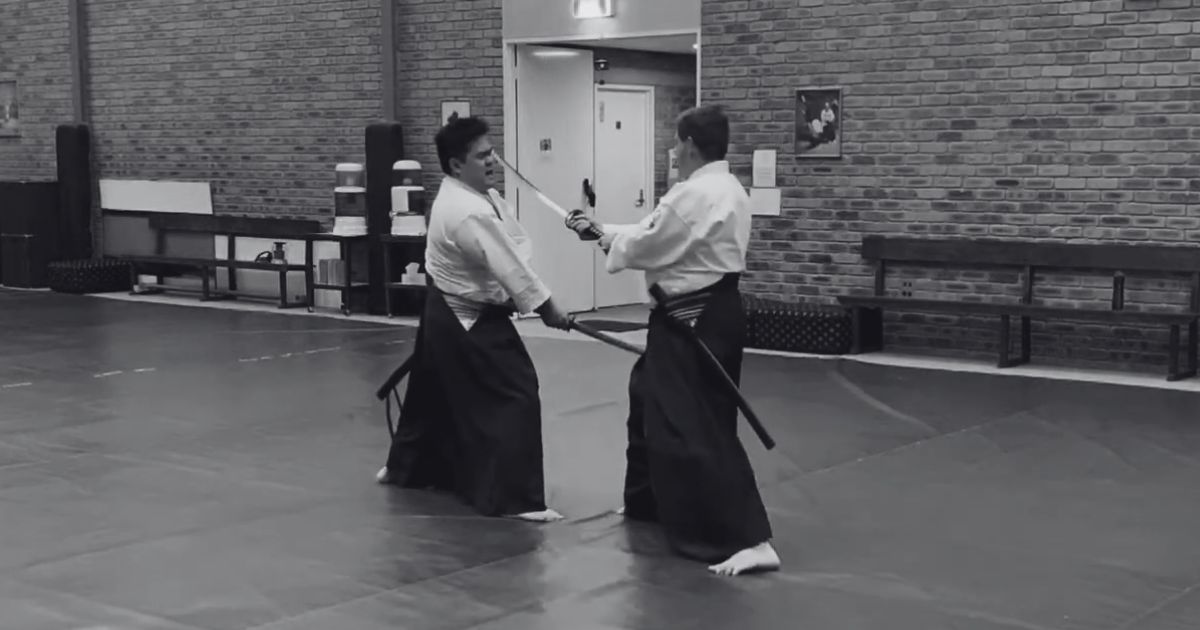
The de Jong lineage comes through Yoshiaki Unno Sensei.
Jan de Jong heavily modified this kata
- Attacks change from rising tsuki
- Order of #3 and #5 have exchanged positions
- Shihonage was changed to move outside, not inside
- Chiburi was changed to the Katori spinning blade style.
- Shinken ( live blade on blade)
Kotekudaki, Hijikudaki, Shihonage, Tenbinnage, Mukaedaoshi
Yoseikan Honbu dojo, 1983 5:07min
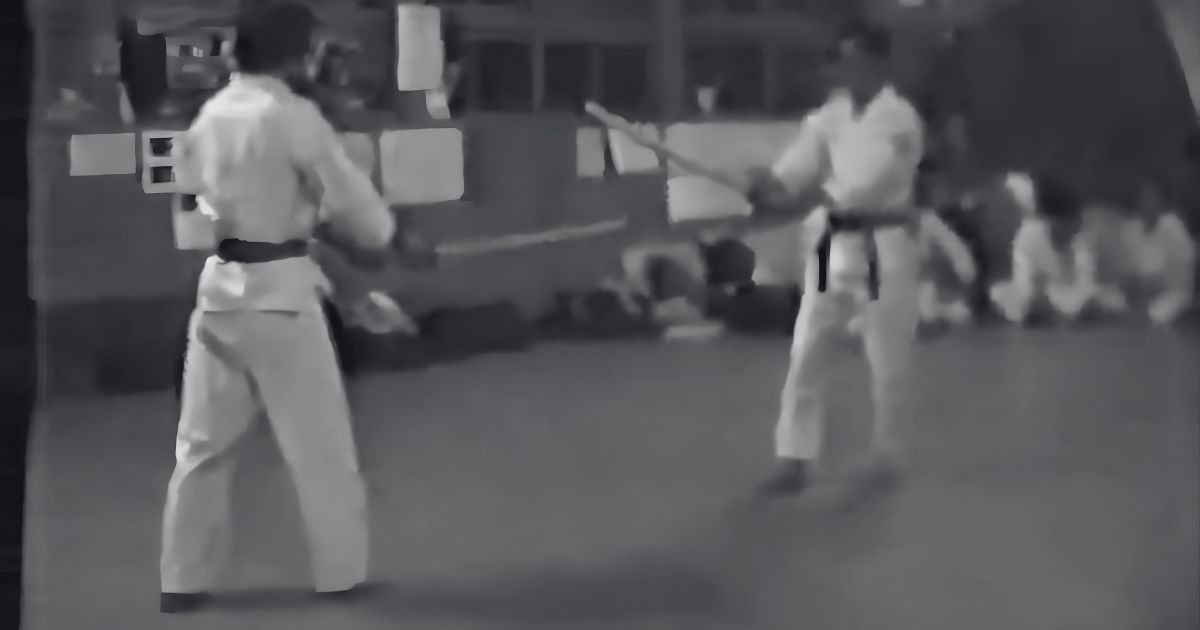
Philippe Galais youtube channel
This demonstration took place during a Yoseikan Aikido seminar in the Shizuoka Yoseikan Hombu dojo (1983).
Minoru Mochizuki sensei headed this seminar organized for a French Tai-Jitsu group traveling in Japan with sensei Roland Hernaez.
Demonstration 1989 10min
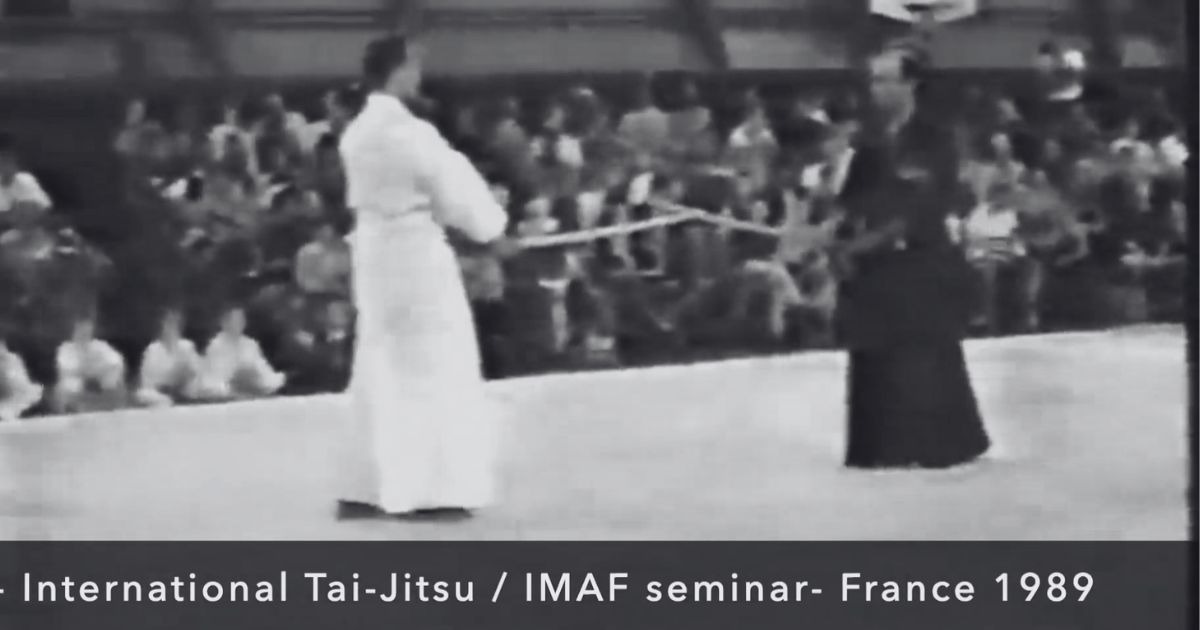
Philippe Galais youtube channel
Ken Tai Ichi No Kata and Hyori No Kata par sensei Raymond Jugeau assisté de Didier Roger. 1989
View
The later version
Mochizuki later published a developed version of the kata in three forms, adding a middle mode — sword against unarmed — in which the empty-handed defender takes the technique and disarms the swordsman.
Sources
Minoru Mochizuki, Nihonden Jūjutsu (日本傳柔術), Tokyo: Kōdansha, 24 December 1978 — Chapter 6, the Ken-tai Ichi no Kata in two forms (sword and body).
Kobukai International Budo - Australia
CLASS TIMETABLE
Mon/Wed 7:30pm-9pm
Sat 1:15pm-3pm
Setup 15mins before class
ADDRESS:
Scarborough Community Hub.
173 Gildercliffe Street, Scarborough, Perth, WA 6019
Minor hall next to Gym.
Free Parking, Showers available
© Copyright 2026 All rights reserved.