The three-form version of the Ken-tai Ichi no Kata is the developed form Mochizuki published in "Dō" to "Sen" o wasureta Nihon budō ni katsu (1995). It keeps the five forms of the earlier version but shows each in three modes rather than two, so the version comprises fifteen techniques in all.
The added mode is the middle one — sword against unarmed — in which an empty-handed defender meets a drawn blade, takes the technique, and disarms the swordsman. Of his work on the kata Mochizuki writes:
This kata is one in which I reconstructed the sword forms from the body-technique of aikidō — and seen this way, the technical principle of aikidō becomes clear.
The three modes
Each of the five forms is shown across the same three settings:
Sword against sword (剣対剣) — the kata in its sword form, both partners armed.
Sword against unarmed (剣対素手) — an armed attacker against an empty-handed defender, who takes the technique and removes the sword. This disarm consistently ends in shiraha-dori (白刃取り) — "taking the bare blade."
Unarmed against unarmed (双方素手) — the same line expressed as empty-hand technique, both partners unarmed.
The three modes are meant to be read across: the same motion runs through all three, whether the defender holds a sword, faces one, or neither.
The five forms
Each form below is given in all three modes.
First form
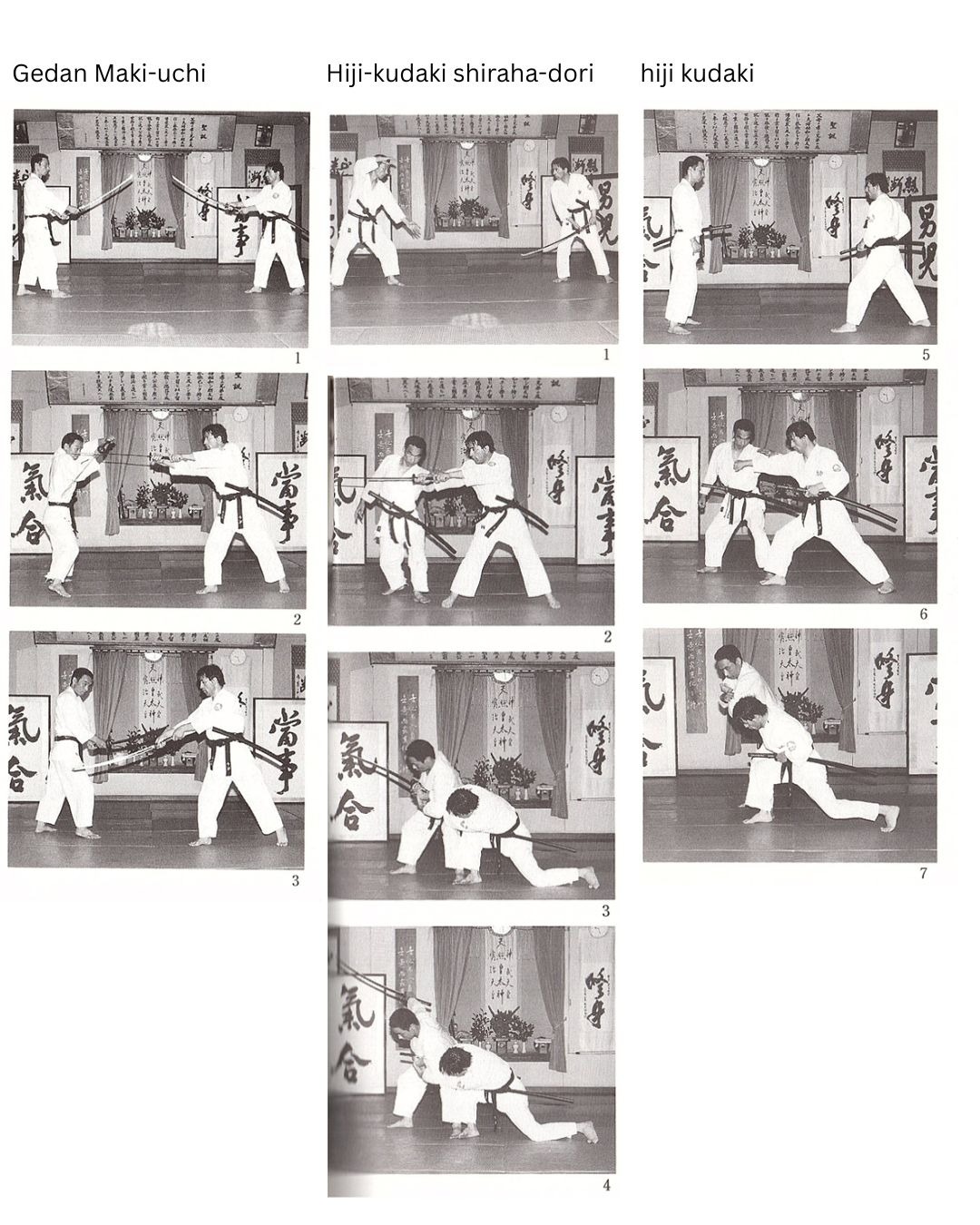
- Sword vs sword — Gedan Maki-uchi (下段巻き打ち), low winding strike. Against a low thrust to the neck, the responder winds the sword down, disengages, and strikes the wrist or elbow.
- Sword vs unarmed — Hiji-kudaki shiraha-dori (肘砕き白刃取り), elbow-break and blade-taking. Letting the cut flow past, the responder enters, cradles the sword-arms beneath the armpit, locks the elbow, and takes the sword.
- Unarmed — Hiji-kudaki (肘砕き), elbow-break. Against a punch to the face, the responder enters on the left and takes the arm beneath the armpit.
Second form
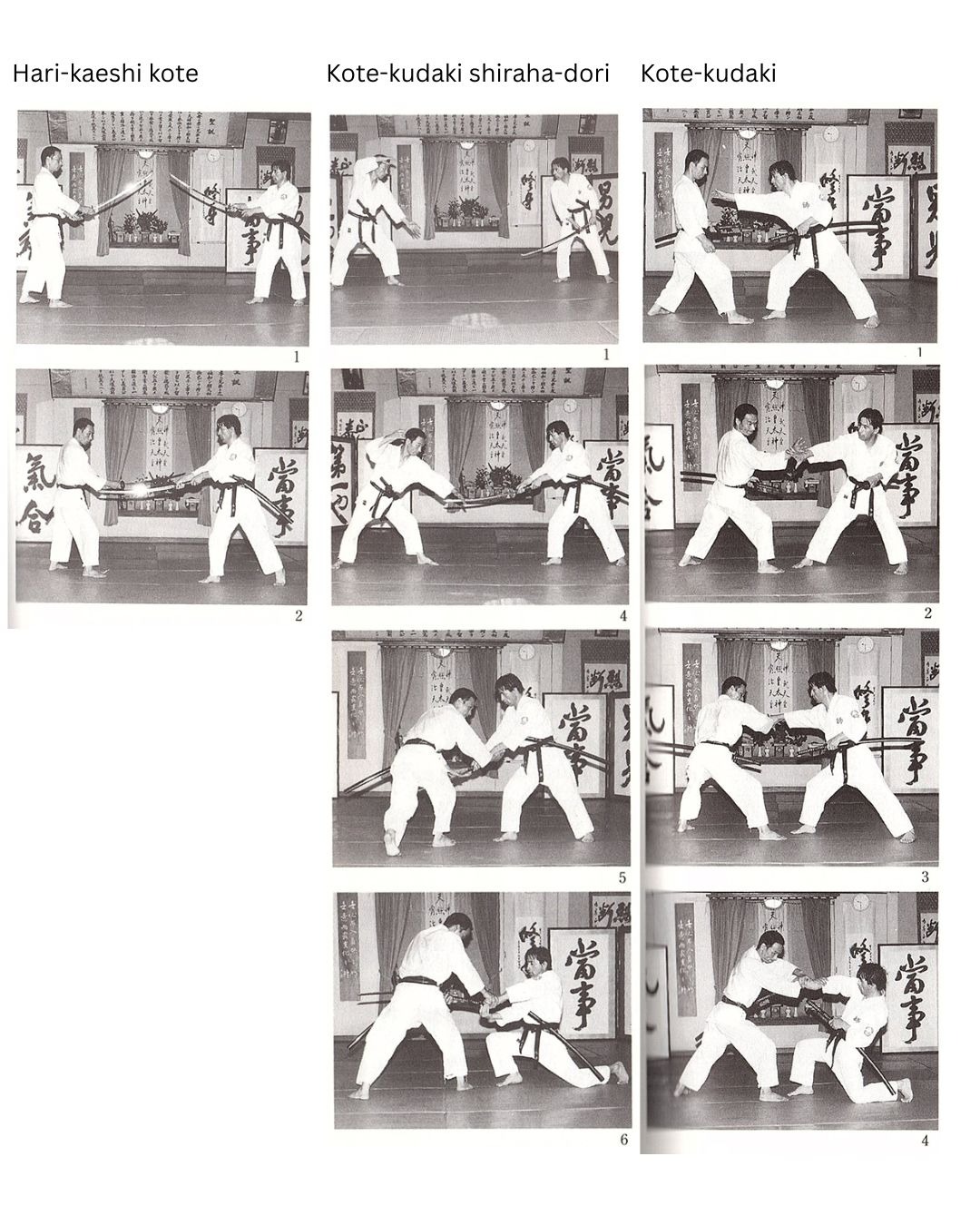
- Sword vs sword — Hari-kaeshi kote (張り返し小手), parry-return to the wrist. Against a pressed strike to the wrist, the responder slips beneath it and returns the strike to the wrist.
- Sword vs unarmed — Kote-kudaki shiraha-dori (小手砕き白刃取り), wrist-crush and blade-taking. The responder brushes the cut aside, enters, presses and twists the wrist, and retrieves the sword.
- Unarmed — Kote-kudaki (小手砕き), wrist-crush. Against a grab to the collar, the responder traps the fingers and folds the wrist.
Third form
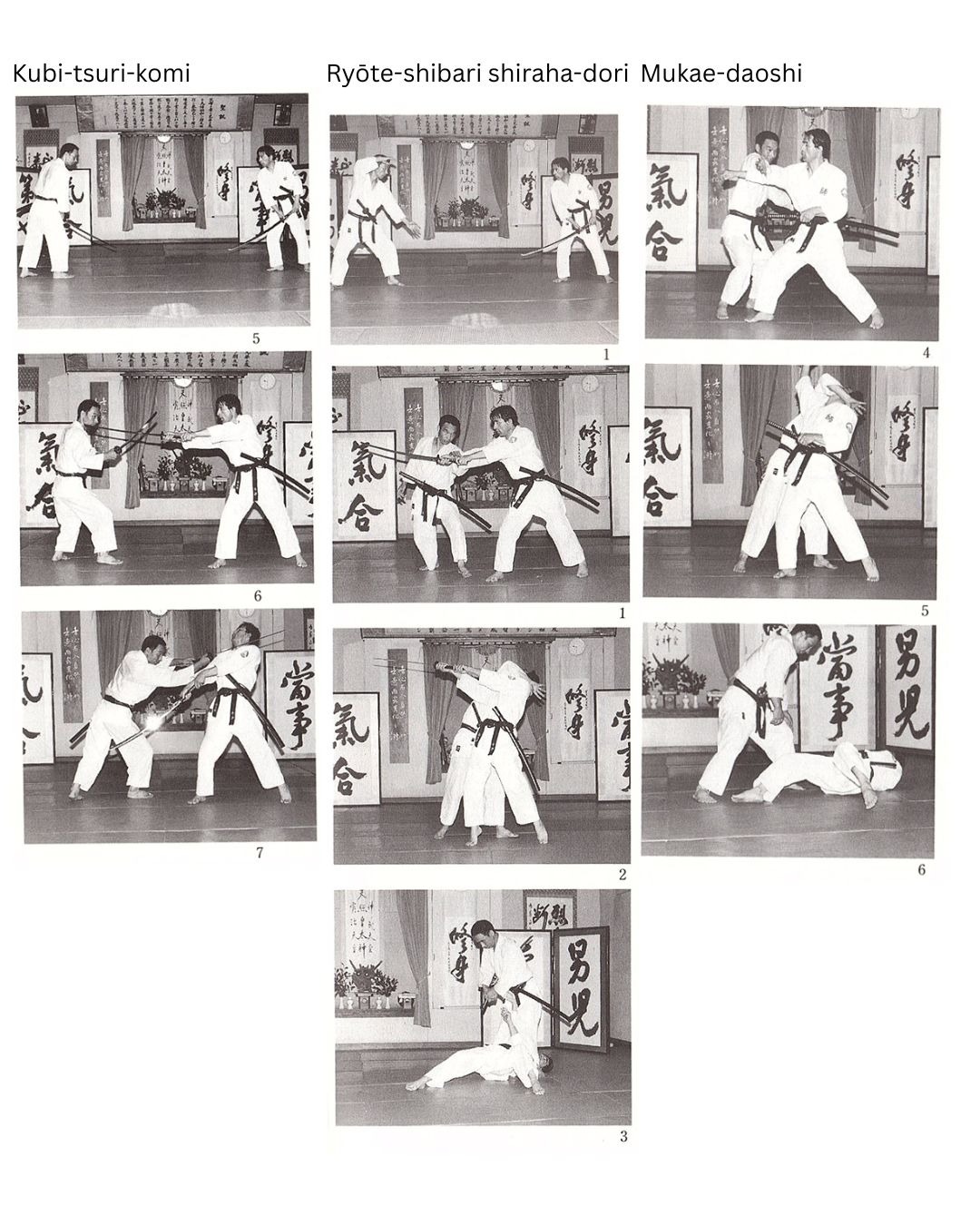
- Sword vs sword — Kubi-tsuri-komi (首摺り込み), neck slide. The responder blocks with the back of the blade, turns it flat, steps in, and slides the cut into the neck.
- Sword vs unarmed — Ryōte-shibari shiraha-dori (双手しぼり白刃取り), two-hand bind and blade-taking. Flow-parrying the thrust, the responder enters, brings the attacker down, traps both fists, steps over the head, and takes the sword.
- Unarmed — Mukae-daoshi (迎え倒し), meet-and-overturn. Against a punch to the face, the responder enters and overturns the attacker backward.
Fourth form
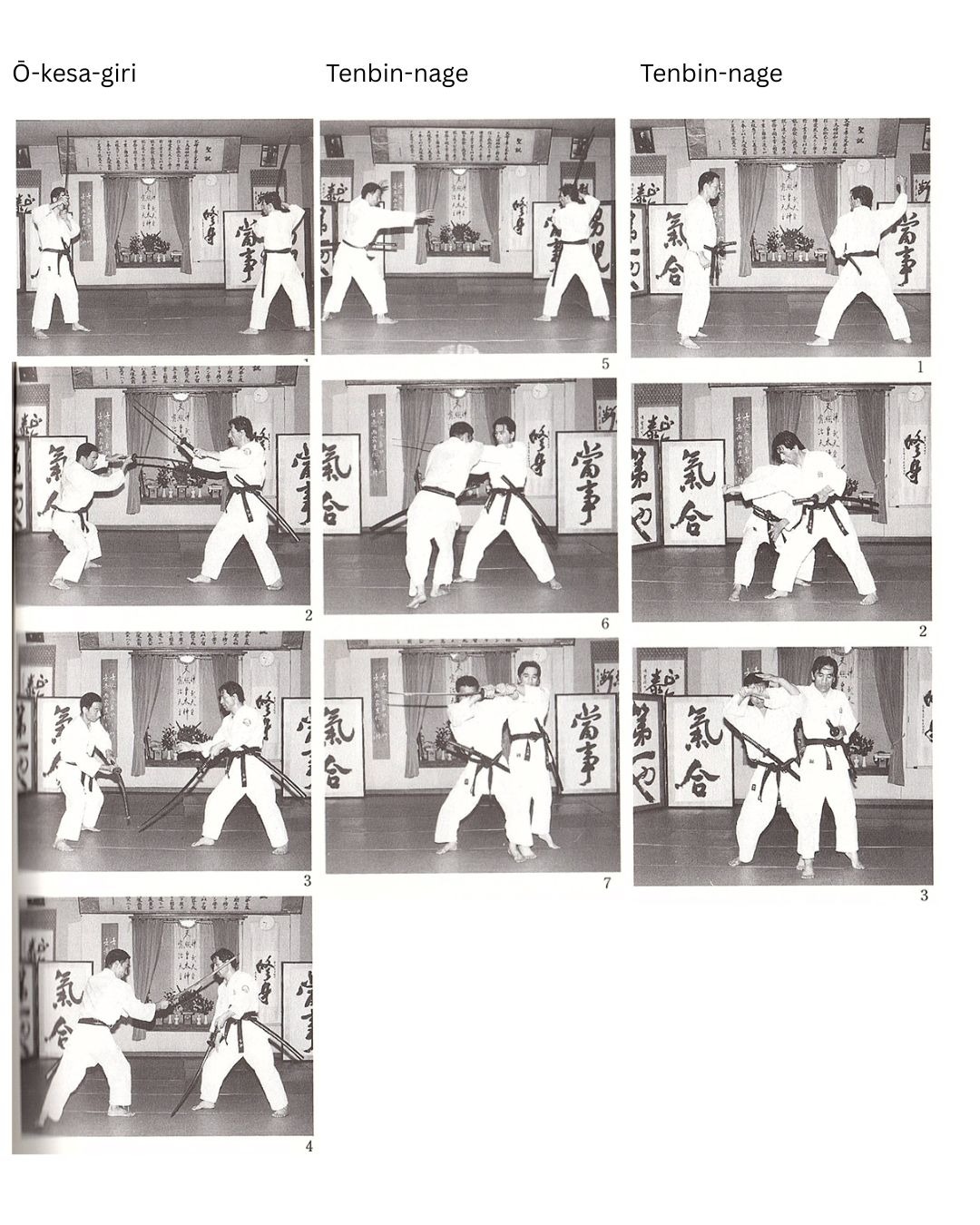
- Sword vs sword — Ō-kesa-giri (大袈裟切り), major kesa cut. From hassō, the responder strikes the wrists from below, brushes the sword past, and cuts the full diagonal from shoulder to opposite hip.
- Sword vs unarmed — Tenbin-nage (天秤投げ), balance throw, taking the sword. The responder enters on the right, grasps the fist, braces the arms across the shoulder, throws, and collects the sword.
- Unarmed — Tenbin-nage (天秤投げ), balance throw. Against a strike to the side of the face, the responder sets the shoulder beneath the arm and throws.
Fifth form
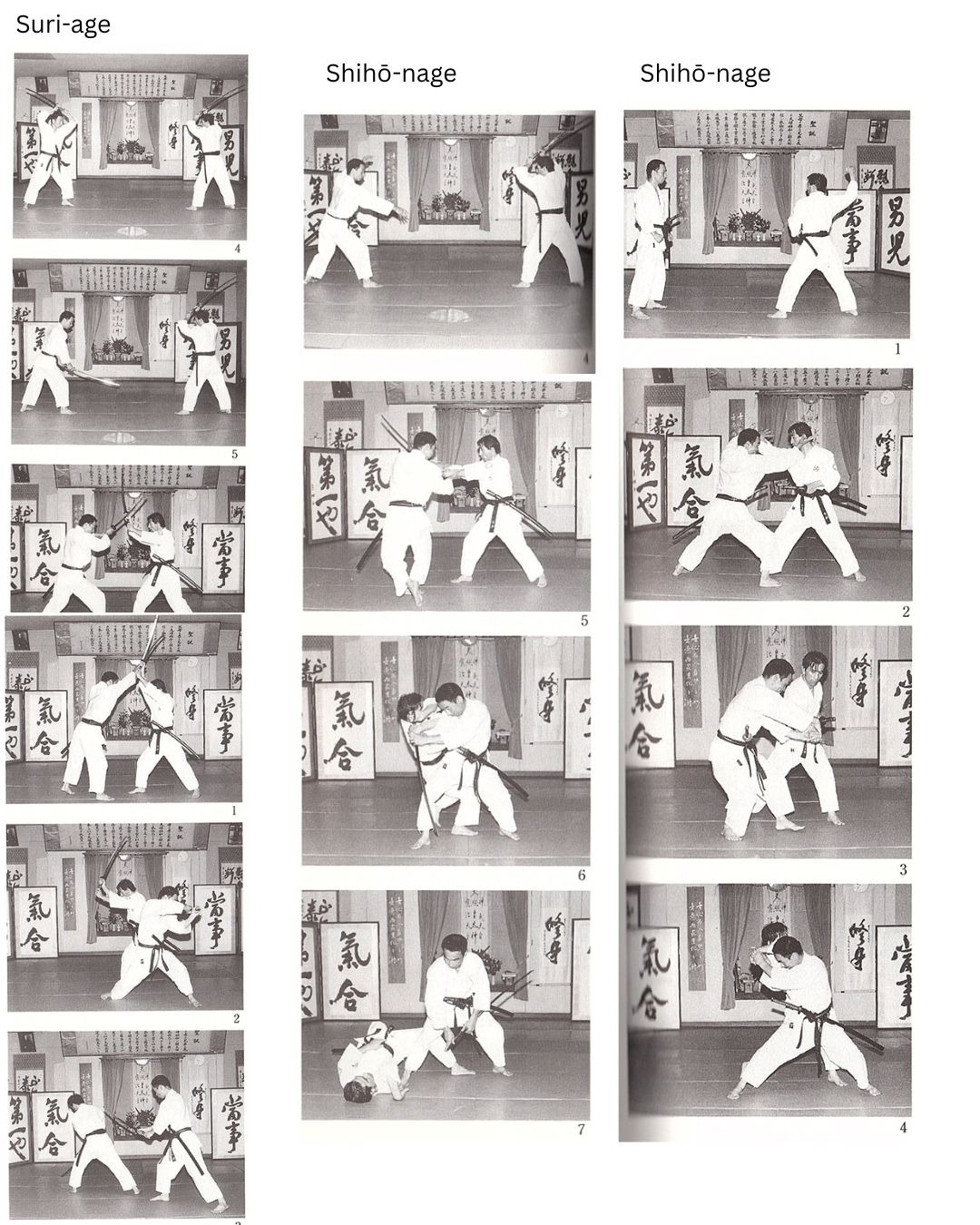
- Sword vs sword — Suri-age (摺り上げ), deflect-and-rise. From jōdan, the responder drops to low guard, sweeps the descending cut up, cuts through the body, and finishes with a kesa cut along the back.
- Sword vs unarmed — Shihō-nage (四方投げ), four-direction throw, taking the sword. The responder enters on the right, traps both hands, turns on the spot, throws, and collects the sword.
- Unarmed — Shihō-nage (四方投げ), four-direction throw. Against a strike to the side of the face, the responder seizes the fist with both hands, turns, and throws.
See it demonstrated
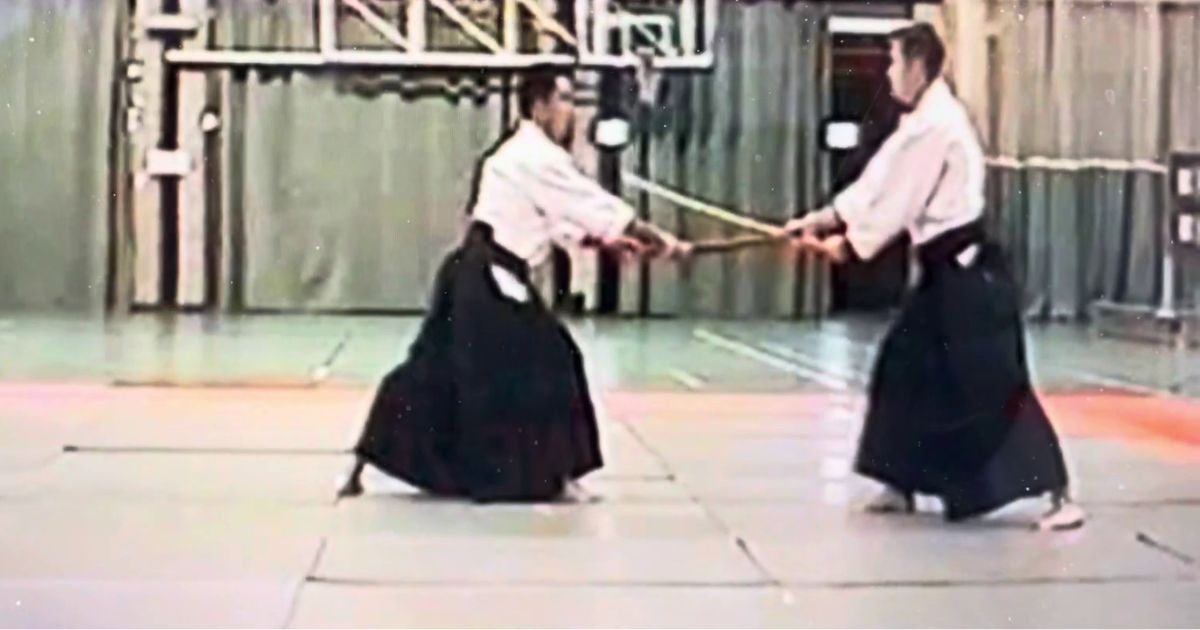
Demonstrations of the kata appear on YouTube from time to time. The following are recordings by other practitioners, linked here while they remain online. Each should show the three-form version — including the sword-against-unarmed (ken-dori) mode.
Yoseikan Honbu Dojo. 10:22min
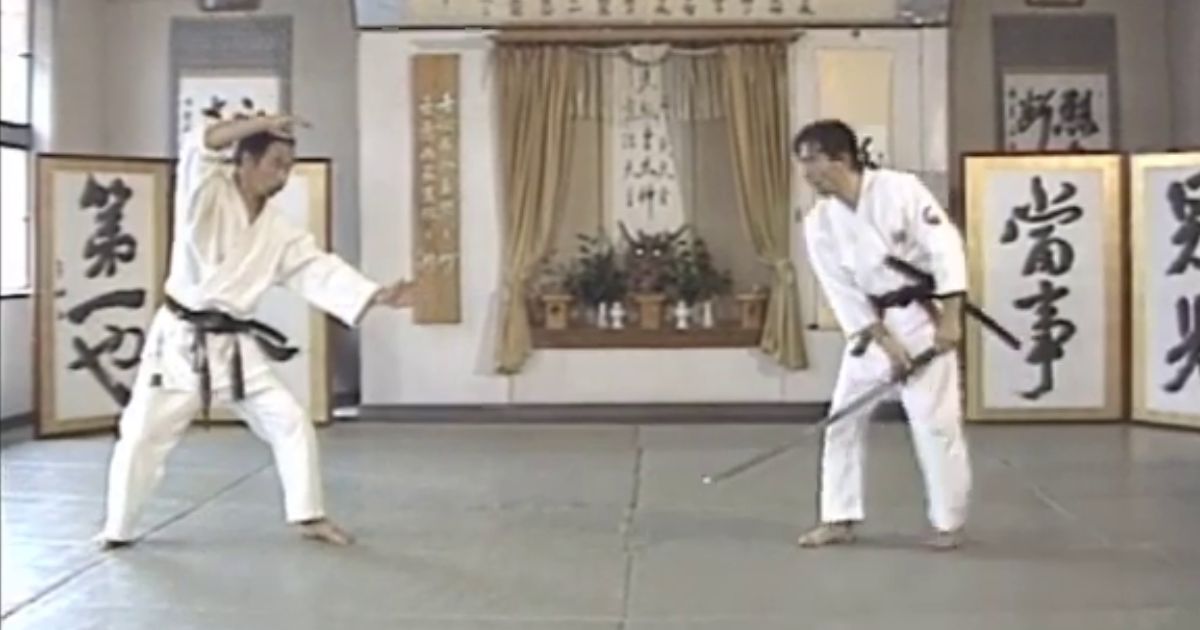
Minoru Mochizuki Sensei 4mins
5rh Dan exam. 7mins
Edgar Kruyning (youtube) 5:07min
View
The earlier version
Mochizuki first published the kata in two forms — sword and body, without the sword-against-unarmed mode — in Nihonden Jūjutsu (1978).
Sources
Minoru Mochizuki, "Dō" to "Sen" o wasureta Nihon budō ni katsu (『道』と『戦』を忘れた日本武道に喝), Tokyo: BAB Japan, 15 February 1995. ISBN 4-89422-177-2 — Chapter 5, §3, pp. 172–189, the Ken-tai Ichi no Kata in three forms (sword vs sword, sword vs unarmed, unarmed vs unarmed).
Kobukai International Budo - Australia
CLASS TIMETABLE
Mon/Wed 7:30pm-9pm
Sat 1:15pm-3pm
Setup 15mins before class
ADDRESS:
Scarborough Community Hub.
173 Gildercliffe Street, Scarborough, Perth, WA 6019
Minor hall next to Gym.
Free Parking, Showers available
© Copyright 2026 All rights reserved.