Same shape. Different engine.
Yoseikan Aikijutsu - Perth. Australia
Same shape. Different engine.
Yoseikan Aikijutsu - Perth. Australia
What Aikijutsu actually is
Aiki-jutsu is a traditional Japanese martial art in which the principle of taking balance — Aiki — is generated entirely by one person, independent of the other's size, strength, or resistance. It shares many techniques with Aikido and jujutsu, but runs on different underlying principles.
If you've trained before, this page is the long answer to a short question: how is this different from what you already know? Some of it will make immediate sense. Some of it won't — not because it's complicated, but because the part that matters doesn't survive being written down. We've marked where that happens. Read it anyway. It tends to read differently afterward.
Same shape. Different engine
Off the mat, from the outside, this looks like Aikido. Or jujutsu. It has to — the techniques are old and they're shared. The same throws, the same locks, the same names appear across dozens of arts. If you photographed a class and showed it to an experienced eye, they'd place it in a tradition they already know.
The difference was never the technique. It's what powers it.
Think of three engines.
- Jujutsu runs on a mechanical one — leverage, anatomy, timing, position. It works because the body has limits, and it works very well.
- Aikido runs on a different idea — blending, meeting force with motion.
- Aikijutsu runs on a third: a principle called Aiki, generated by one person, that does its work whether the other is bigger, stronger, faster, or resisting.
Three engines under similar-looking movement. This art is the third one. That's the whole claim, and the rest of this page is what it means. We're not telling you the other engines don't work. They plainly do. We're telling you this is a different one — and that the difference is invisible until you feel it.
What Aiki is
Aiki is generated entirely by one person — the one performing the technique. We call them Tori. The other person, the one receiving it, is Uke.
Uke contributes nothing to the Aiki. Not to creating it, not to maintaining it. This is the part that's hard to accept on paper, and we'd rather you hold it lightly than swallow it whole: the effect is not a thing the two people build together. It's something one person generates, and the other undergoes.
It shows up physically — as a kind of sticking at the point where the two bodies meet. Not a grip. Not a hold. We'll come back to what it actually is, because it's stranger than it sounds.
For now: Aiki is not something done with you. It's something that happens to you. Keep that distinction. Everything else rests on it.
When balance is lost
You already know kuzushi — taking the other person's balance. Every grappling art has it. You may have spent years on it. You may teach it.
Here's the difference, stated plainly: in most arts, balance is taken at contact — you make contact, then you break the structure. Here, it begins before contact. Before the grip. At posture, through intent, before anything is touched.
That probably sounds like a small thing, or a word-game. It isn't, and we're not going to try to prove it in text — because this is exactly the kind of thing that can't be argued, only felt. If you come, it's one of the first things you'll notice: that your balance was already gone before you understood why, and before you could do anything about it.
If you've trained for a long time, this is usually the moment your existing knowledge stops helping. That's not a problem. That's the point where it gets interesting.
The wall, and what your body does
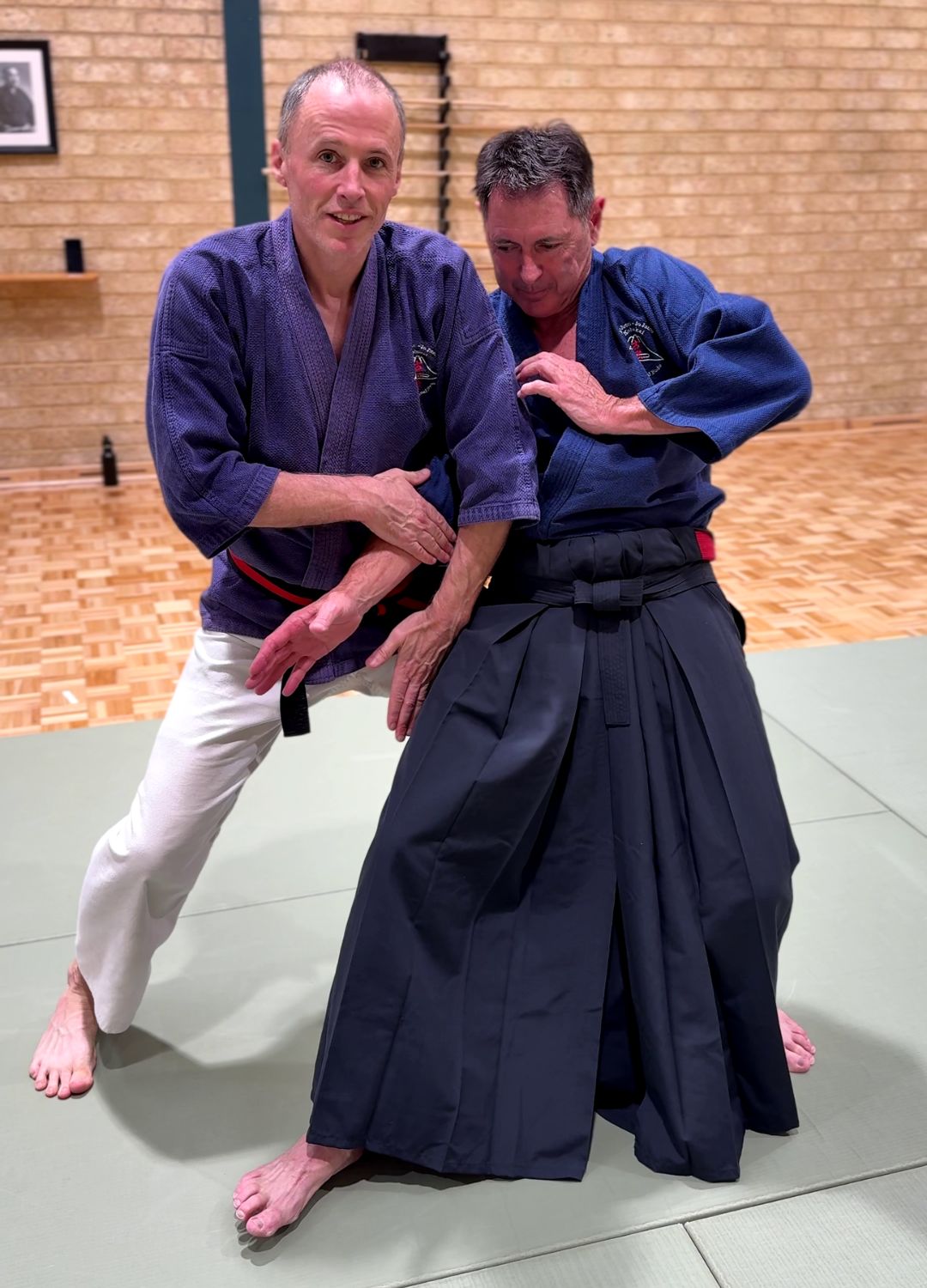
This is the centre of it, and the part most worth reading twice.
When Tori moves, they move into space that's open — never through you, never into a collision. They arrive, and for a moment their body becomes the one stable thing available to lean on. A wall.
Now — your conscious mind, in that moment, wants out. It wants to escape, recover, get clear. But underneath the conscious mind, the part of you that manages balance acts faster, and it has one priority: find support. And the only support there is, is Tori.
So your own balance reaches for it. It accepts the wall. It settles against the support — quietly, below any decision you'd make — even as the thinking part of you would rather be anywhere else. You're not being held. You're holding on — to the one thing steadying you — and you didn't choose to.
That settling is the thing. That's the sticking we mentioned. That's where the whole technique is already decided — before anything that looks like a technique has happened.
If that didn't fully land, leave it. It's the part that tends to arrive late — and it arrives in the body, not on the page.
Nothing is done to you
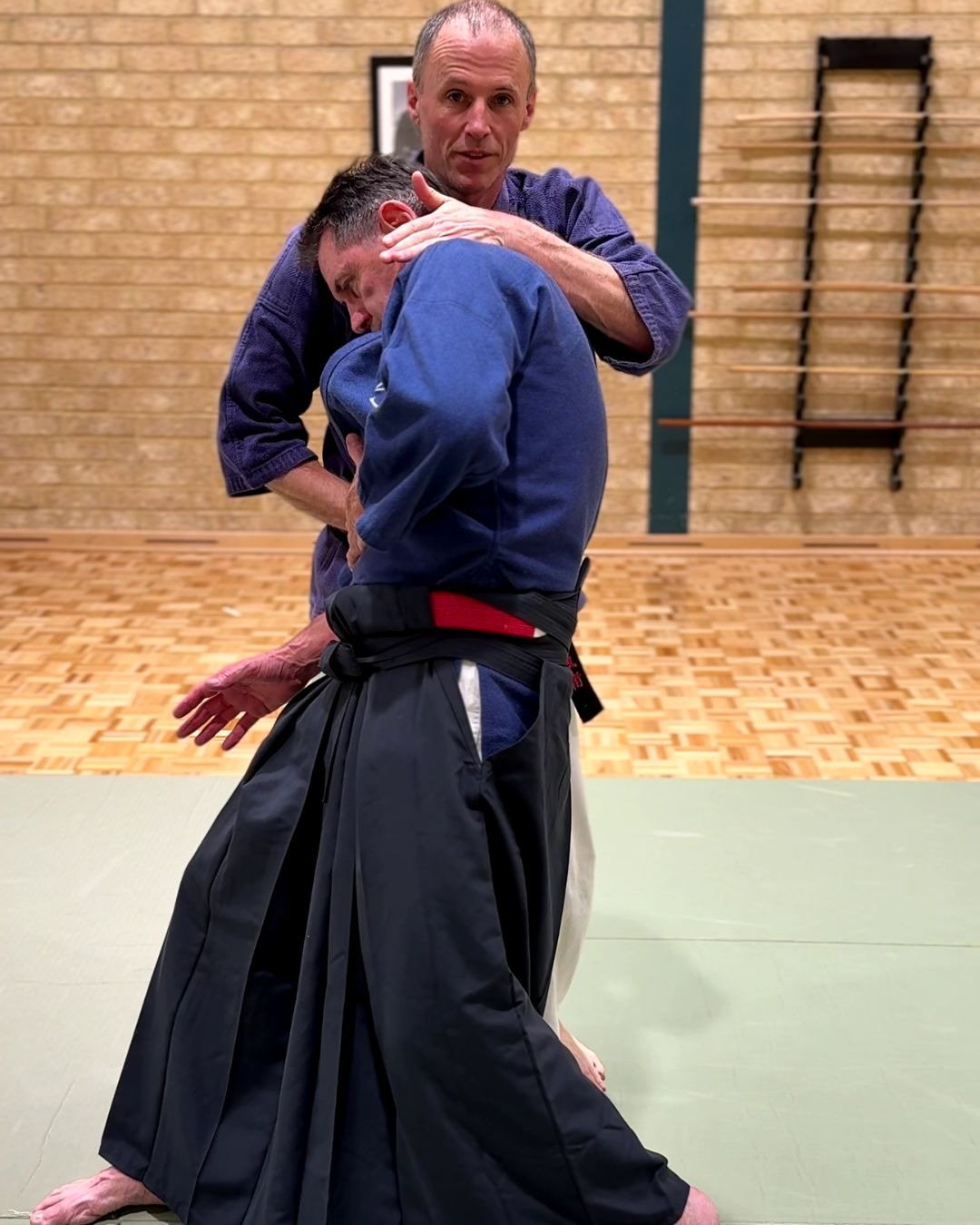
Here's what follows from all of that, and it's the part people feel before they understand.
There's no pain. Not because anyone is being careful with you — because there's nothing being applied. No joint is the weapon. No lock is cranked. You're not held by something done to your wrist or your elbow; you're held by your own balance reaching for a wall. There's nothing to resist, because nothing is being pushed against you.
The throw, when it comes, is just a consequence — the wall moves, and what's leaning on it goes too. You go down, and the honest report most people give afterward is that they're not sure why. Not "that hurt." Not "I couldn't get out of that lock." Just: something happened, and I can't account for it.
If you left a previous art because of the wear — the cranks, the impact, the slow accumulation of small injuries — this is worth sitting with. The depth is the same. The cost to your body is not.
Tori is the hinge
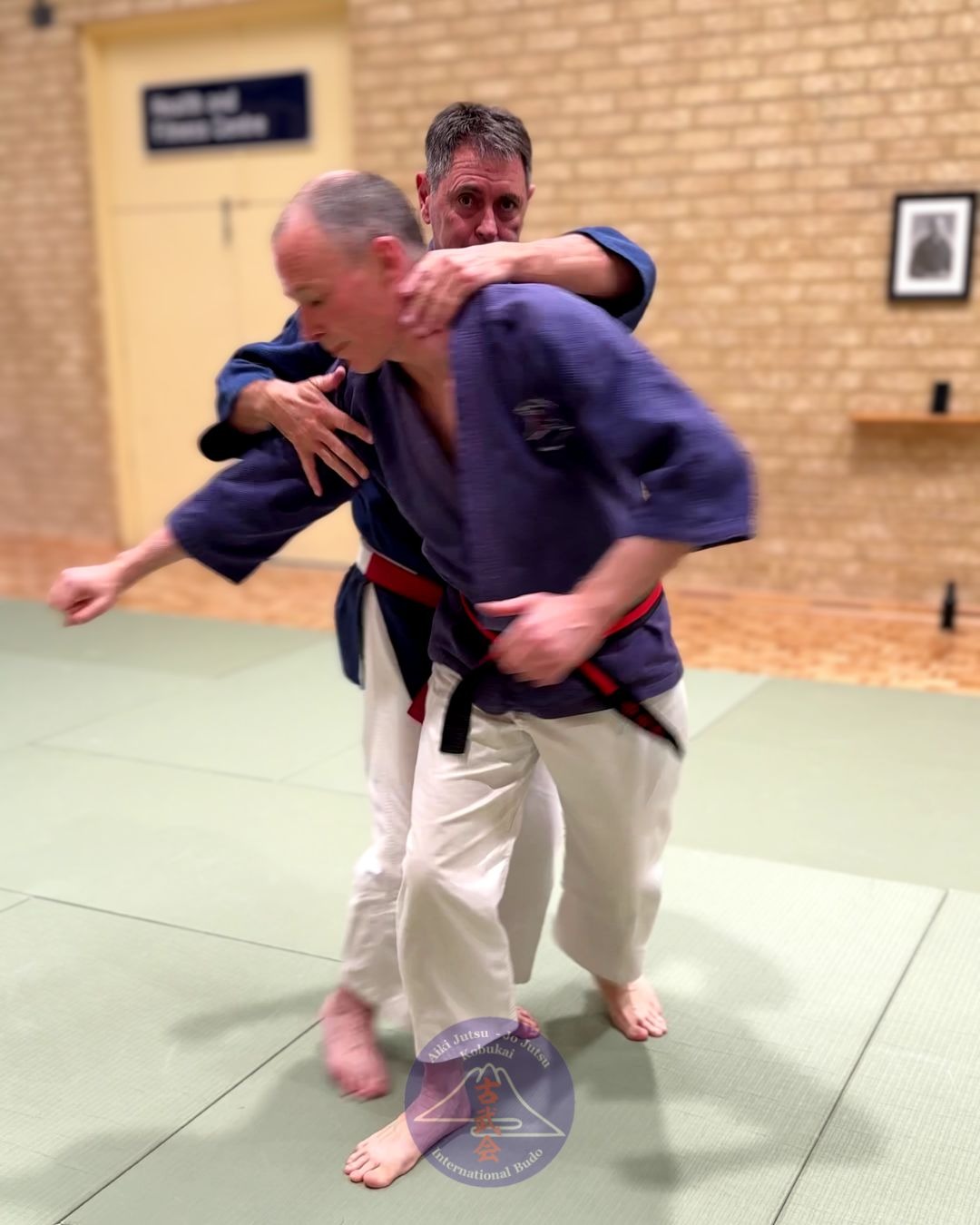
A picture, because it's the clearest way to hold the movement.
Tori is a door hinge. You are the door. Tori doesn't chase you, push you, or travel after you. Tori moves once, freely, to where they need to be — and from there, they turn. And because you're already leaning on them, you swing around them. The hinge stays in the centre. The door does all the travelling.
This is why nothing gets forced. The technique isn't something Tori does to you — it's the shape your movement makes as you go around the hinge. Whichever way Tori turns, that's the technique. It gets named afterward. It was never chosen in advance, and it was never aimed at you.
Why this can't be written down
We've been honest about the gaps. Here's why they're there.
Aiki is two different experiences happening at the same instant, in two different bodies. Tori feels free movement, no obstruction, a clear line. You feel your own balance settling onto a wall you'd rather escape. Same moment. Same point of contact. Two completely different things.
No page can give you both. No video can. Even standing at the edge of the mat watching won't do it — you'd see the shape and miss the engine entirely, which is exactly why it photographs as Aikido. The only way to know what this is, is to be one of the two bodies while it happens.
So that's the limit of this page, stated plainly. We can tell you there's a different engine. We can tell you it's generated by one person, that your own balance does half the work, that nothing is done to a joint. We can't make you feel it from here. That part is only ever felt.
If you've read this far and some of it is still sitting just out of reach — that's the right place to be. It tends to resolve in about an hour, on a mat.
What you need to bring
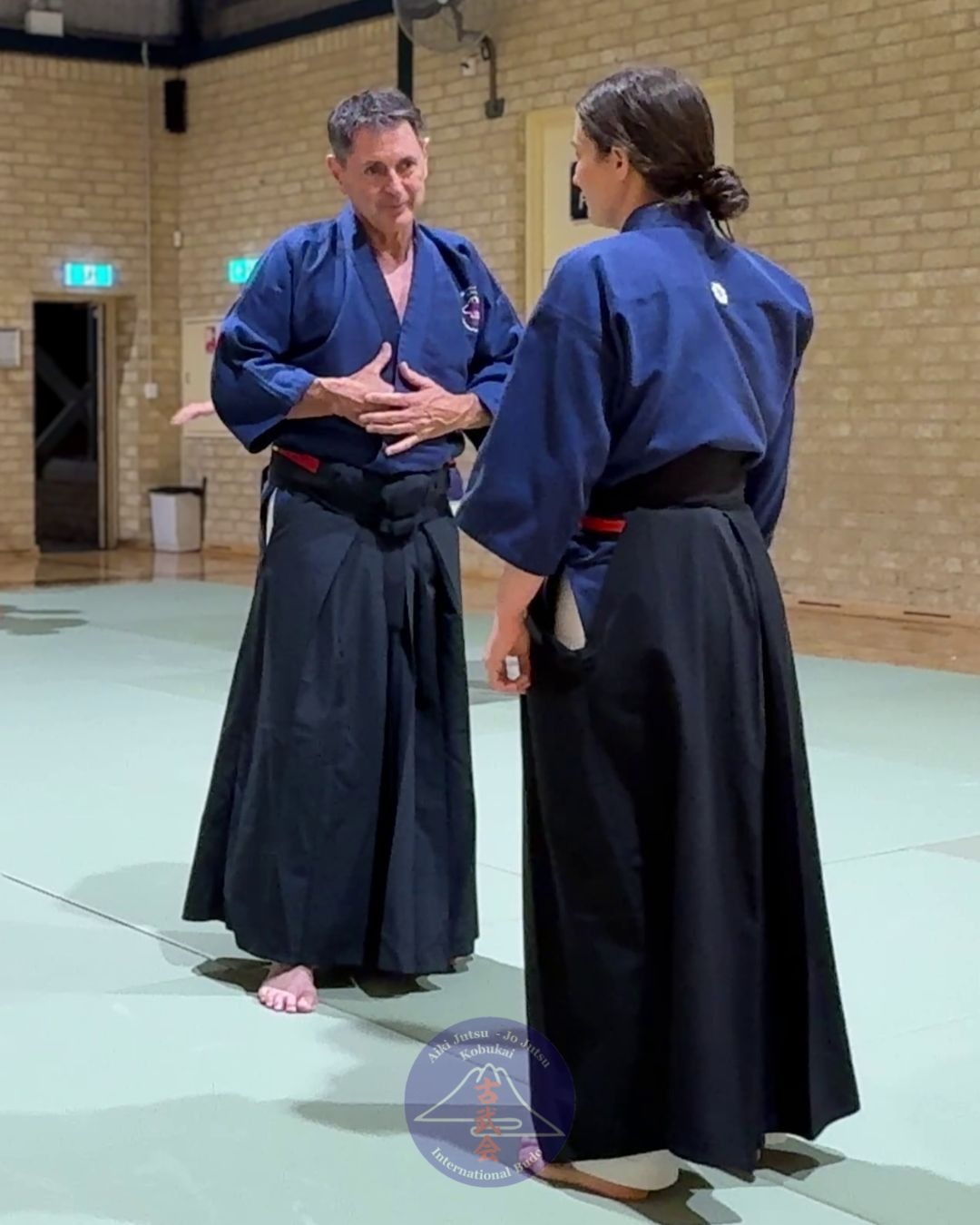
So we don't waste each other's time, here's the honest contract.
Your rank comes with you, but it stays at the edge of the substance. You'll have good ukemi, you'll be comfortable with contact, none of this will rattle you — and at the level that matters, you'll be starting again. A complete newcomer beside you might catch a principle faster, because they've nothing to unlearn. If that's an interesting idea rather than an insulting one, you'll do well here.
Come willing to feel before you judge. The engine works underneath the conscious, comparing mind — so a mind set to test it can't feel it, because the testing keeps the wrong part switched on. Feel it once, honestly. Compare afterward, all you like.
And expect an absence. No pain, no force, nothing to push against — and your training will tell you that absence means nothing happened. That instinct is the one thing to set down for an hour. Notice instead that you went down, and can't say why.
We won't tell you your years were wasted. We won't claim this is better than what you did. We'll show you a different engine, with the only instrument that can detect it — your own body — and you'll know soon enough whether it's for you.
One last thing
You might notice, if you come — and probably won't think about until later — that every technique starts and finishes the same way. Tori standing, balanced, in kamae. Ready. Not slumped over the person they've thrown, not tangled in the finish. Upright, composed, already set for whatever comes next.
We don't train that as a separate skill. It's just where everything ends, every time.
You might find yourself wondering why.
Where to go from here
There are two ways in, sorted by what you've done before.
New to martial arts
Start with Foundations
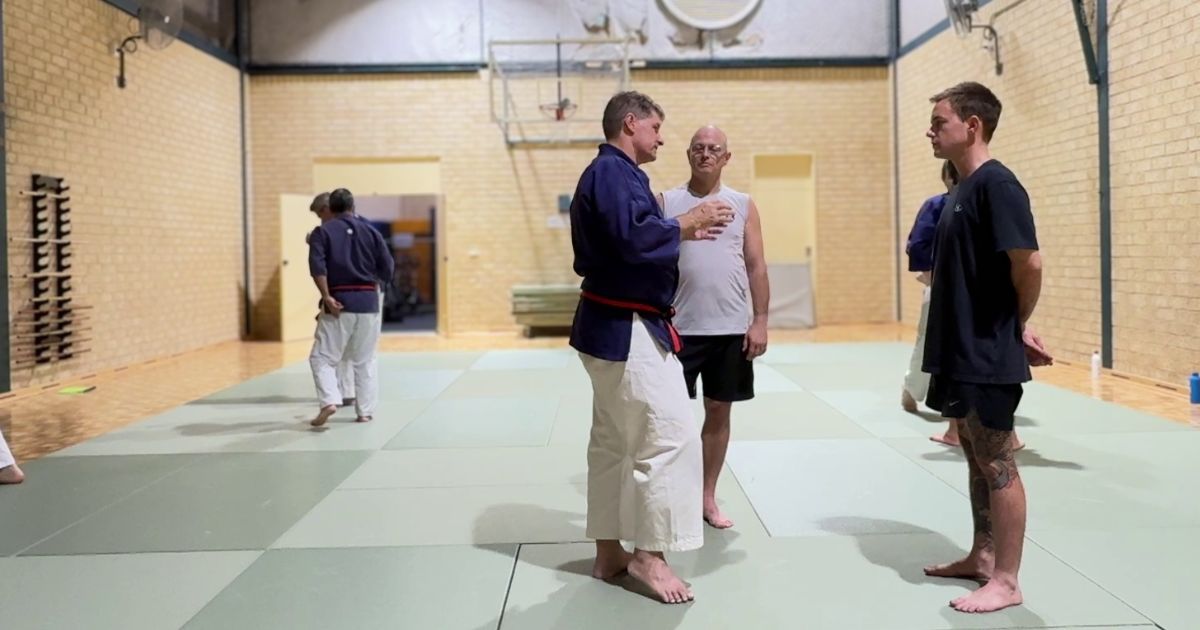
If you've never trained, or trained years ago and walked away — start with the Foundations Course. It builds the principles from the ground up, in order, with nothing assumed.
Experienced Martial Artist
Come and feel it
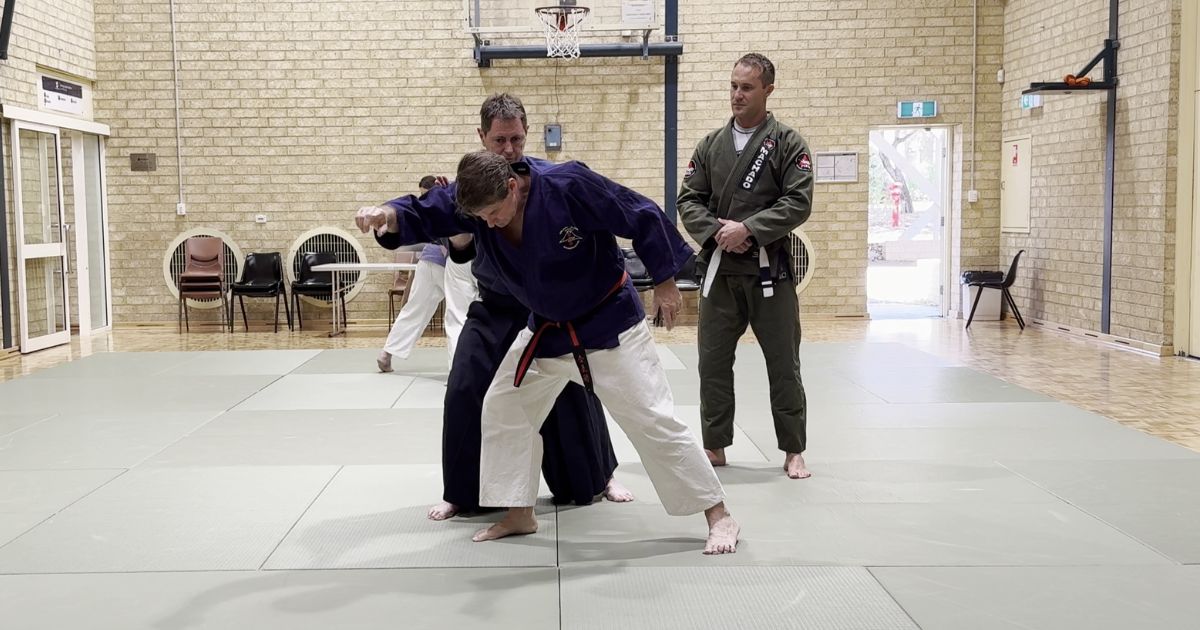
If you're an experienced martial artist — the only way forward is to come and feel it. One session. Bring your gi; it won't be like ours, and that won't matter. You'll train, not watch.
Either way, the rest of this only exists on the mat. Come and feel it.
Kobukai International Budo - Australia
CLASS TIMETABLE
Mon/Wed 7:30pm-9pm
Sat 1:15pm-3pm
Setup 15mins before class
ADDRESS:
Scarborough Community Hub.
173 Gildercliffe Street, Scarborough, Perth, WA 6019
Minor hall next to Gym.
Free Parking, Showers available
© Copyright 2026 All rights reserved.